

Orbi Access Point Vs Router Mode
Difference Between Admission Signal and Router
The unbelievably rapid advancement of computer technologies has brought humanity a multitude of devices, appliances, and gadgets. In fact, at that place are then many unlike types and categories of computer equipment that it can be very easy for regular consumers to get confused by the subtleties of each device or gadget.
Ane of the questions that our technical experts at LigoWave are oftentimes asked is what is the departure betwixt an admission bespeak and a router. The fundamental differences between these two devices are quite unproblematic, merely there are other minor, yet still important, distinctions.
What is a Router? A router is a network device that serves ii master functions: (ane) it connects multiple computers, phones, tablets, or other devices to form a managed local area network, and (2) it provides Internet access to all of the compatible devices that are connected to the router.
A local expanse network (LAN) tin exist ready by but deploying a router and connecting i or several devices to it. Modern routers permit users to connect devices both via Ethernet cables or wirelessly (using Wi-Fi).
Yet, in guild for the router to distribute and deliver data to the devices within the local area network, it must exist connected to an Cyberspace service provider'south customer premises equipment (CPE) via an Ethernet cable.
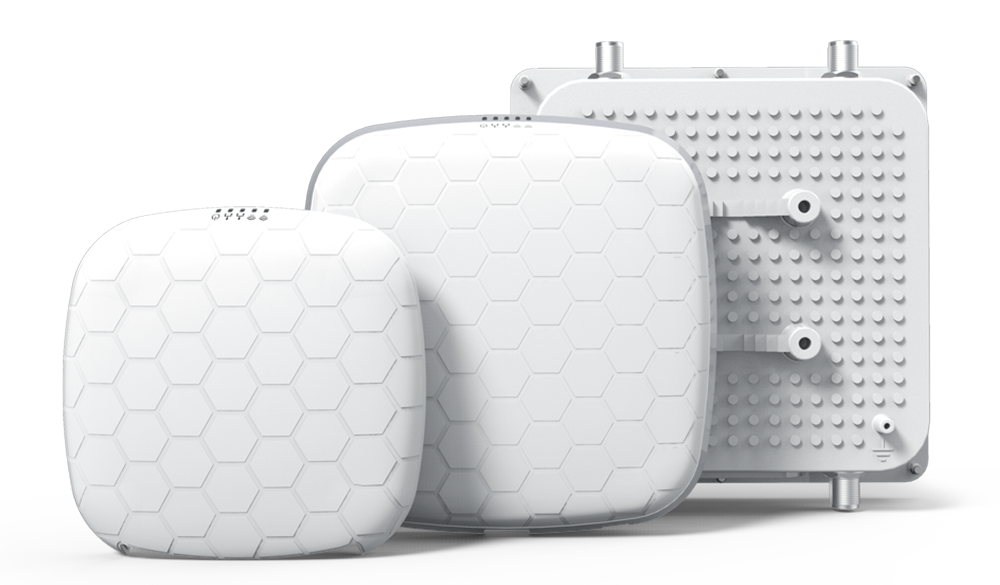
What is an Admission Signal? An admission point is a wireless network device that acts as a portal for devices to connect to a local expanse network. Access points are used for extending the wireless coverage of an existing network and for increasing the number of users that tin can connect to it.
A high-speed Ethernet cable runs from a router to an access signal, which transforms the wired betoken into a wireless one. Wireless connectivity is typically the but available option for access points, establishing links with terminate-devices using Wi-Fi.
Other Functions. Other than providing a platform for various devices to communicate amongst each other, routers also have firewall and password protection functionality. This ensures that the connected wireless devices are protected against any threats that may arise from outside of the local area network.
Main Differences. The router acts as a hub that sets upwardly a local area network and manages all of the devices and advice in it. An access point, on the other hand, is a sub-device inside the local area network that provides another location for devices to connect from and enables more devices to exist on the network.
Wireless routers can part as access points, only not all access points tin can piece of work every bit routers. While routers manage local area networks, communicate with outside network systems, acquire, distribute, and dispatch data in multiple directions, establish a signal of connectivity, and ensure security, access points typically simply provide access to the router'due south established network.
Which is Better? The answer to the question which one is improve? is that it depends on the needs. For homes and small business, routers may be the optimum (if not the best) solution, while medium to large enterprises and organizations will certainly require a network of access points and switches.
Access Points in Action. A few years agone, LigoWave devices were deployed by Enter Srl., a leading professional person software solutions company and Internet services provider in Italy, for the purpose of setting up Internet access using access points at Festival ICT–B2B. The annual event brings in more than 15,000 tech enthusiasts and professionals from Italy and abroad.
It was estimated that more than 20,000 devices might need a steady and reliable Net connection during the event. What is more, limited channel availability and RF-intense environments posed a challenge to setting up an effective network of access points that would be capable of providing a quality service to large amounts of people.
Later on careful planning, LigoWave provided 30 Infinity 2N access points for deployment in strategic locations. The network of access points covered an area of 2,400m² and provided Cyberspace access to ane,800–2,400 concurrent users, averaging at threescore–80 users and fifty–70Mbps throughput per access indicate. Despite the challenges, the average CPU load was low (20–30%).
Careful and comprehensive planning helped to decide the all-time locations for admission points, eliminating frequency overlap and reducing dissonance. Moreover, auto-aqueduct, auto-transmit, and dual band capabilities have allowed for like shooting fish in a barrel configuration, minimal maintenance, and increased connection chapters.
Since the event, the third generation of Infinity access points has been adult and introduced to the consumer market, and then the possibilities are at present even greater. The uncomplicated, yet powerful, Infinity line of products brings efficiency, reliability, and universality to the next level.
For more information on the Infinity production series, consult the LigoWave website and supplementary documentation provided in the infinity series page.
Source: https://www.ligowave.com/difference-between-access-point-and-router
Posted by: currywineve.blogspot.com
0 Response to "Orbi Access Point Vs Router Mode"
Post a Comment